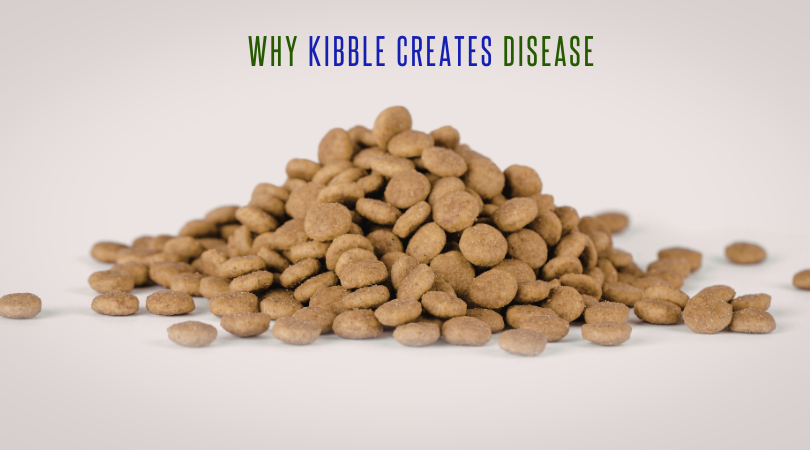
Why Kibble Creates Disease
Posted by Jewel on Jan 30, 2026
Why Kibble Creates Disease- A chapter from my new book
'Raising a Holistic, Happy, Healthy, HighVibe Pet'
For decades, pet parents have been encouraged to believe that dry kibble is a complete and balanced food, carefully engineered to meet all their animal’s nutritional needs. This belief has been reinforced through advertising, veterinary endorsements, and the sheer convenience of pouring pellets into a bowl. Yet convenience has quietly replaced biological truth, and the cost of that replacement shows up in declining health, chronic disease, and shortened vitality.
Every bag of kibble carries an invisible burden. Mass production requires ingredients to be sourced, stored, transported, and processed under conditions that invite contamination. Bacteria are introduced during manufacturing. Mold toxins develop in grains before they ever reach the factory. Insects and rodents inevitably come into contact with stored agricultural products, and their remnants become part of the final formula. These realities are not accidents; they are inherent to large-scale grain-based food production.
Dogs and cats are not built to thrive on grains. Their digestive systems are shaped by millions of years of evolution as hunters and scavengers, designed to break down animal tissue efficiently and safely. When grains, legumes, and plant proteins replace meat as the foundation of the diet, digestion becomes strained. Undigested carbohydrates ferment in the gut, triggering inflammation that spreads far beyond the intestines. Over time, this internal irritation manifests as arthritis, skin disease, metabolic disorders, autoimmune conditions, and cancer. These outcomes are treated as separate diagnoses, yet they often share the same dietary root.
The connection between kibble and disease is easy to miss because the damage does not occur overnight. Symptoms develop slowly, quietly, and progressively. A little itching becomes chronic skin trouble. Occasional digestive upset turns into lifelong sensitivity. Mild lethargy deepens into endocrine imbalance. By the time the body can no longer compensate, the original cause has long been forgotten.
The pet food industry has been remarkably successful at framing convenience as nutrition. Meanwhile, the same corporations that manufacture processed pet food often profit from the medications used to manage the illnesses their products contribute to creating. This cycle benefits shareholders, not animals.
Dry kibble is produced through extreme heat and pressure, a process that destroys natural enzymes and alters fats and proteins into forms the body struggles to recognize. To compensate, manufacturers spray synthetic vitamins, preservatives, and flavor enhancers onto the finished pellets. These additives may meet minimum requirements on paper, but they cannot replicate the living, complex nutrition found in fresh food. The body does not respond to them in the same way, and over time the detoxification organs bear the burden.
One of the most damaging contaminants in kibble is mycotoxin exposure. These fungal toxins develop in grains during growth and storage and remain intact even after high-temperature processing. Mycotoxins accumulate in the liver, kidneys, and fatty tissues, weakening immune function and increasing cancer risk. While recalls occasionally make headlines, many contaminated products never reach that threshold because symptoms unfold gradually rather than as acute poisoning.
Chemical preservatives used to stabilize fats for long shelf life further compound the problem. Substances added to prevent rancidity introduce oxidative stress at the cellular level, forcing the body to expend energy neutralizing toxins instead of repairing tissue. Genetically modified grains add another layer of uncertainty, carrying pesticide residues that disrupt gut bacteria and interfere with nutrient absorption. These ingredients were never part of a carnivore’s evolutionary diet, yet they now make up the majority of what many pets consume.
Plant-based proteins are often used to inflate protein percentages on labels, creating the illusion of nutritional adequacy. However, the biological value of these proteins is low for carnivores. They lack essential amino acids in the correct proportions needed for enzyme production, muscle maintenance, and immune defense. The body must work harder to extract what little value they offer, while deficiencies quietly accumulate.
When we step back and observe the physical design of dogs and cats, the truth becomes unmistakable. Their teeth are shaped for tearing flesh, not grinding plants. Their stomach acid is highly acidic, capable of neutralizing bacteria and breaking down bone. Their digestive tract is short and efficient, optimized for rapid processing of animal tissue rather than prolonged fermentation of plant matter. Every aspect of their anatomy points toward a meat-based diet.
The Raw Prey Model Diet aligns with this design by mimicking what carnivores would naturally consume. Muscle meat provides complete proteins and amino acids for repair and immune strength. Organ meats supply concentrated vitamins and minerals in their most usable forms. Bones deliver calcium and phosphorus in proper balance while also supporting dental health and jaw strength. Together, these elements create a complete nutritional profile without the need for synthetic supplementation.
Raw food retains natural enzymes that support digestion and reduce the workload on the pancreas. These enzymes begin breaking down food immediately, allowing nutrients to be absorbed efficiently and reducing inflammatory responses in the gut. The fats found naturally in raw meat carry fat-soluble vitamins that the body recognizes and uses effectively, supporting vision, hormone balance, and cellular integrity.
Moisture content is another critical difference. Raw meat contains natural water that supports hydration at a cellular level. Dry kibble, by contrast, contributes to chronic low-grade dehydration, placing long-term strain on the kidneys and urinary tract. Many pets fed dry diets drink more water yet remain underhydrated because moisture consumed separately does not replicate the hydration provided by food itself.
Transitioning to a species-appropriate diet often feels intimidating, yet the body adapts quickly when given the chance. Dogs typically adjust within days, responding with improved appetite, better stools, and increased energy. Cats may require more patience due to imprinting on textures and flavors, but persistence is rewarded with profound improvements in health and vitality.
During the transition, the body begins to detoxify from years of processed food exposure. Temporary digestive changes can occur as the gut microbiome rebalances and accumulated toxins are released. These shifts are signs of adaptation, not failure. Supporting digestion gently during this period allows the body to recalibrate and move forward stronger than before.
As raw feeding becomes established, the transformation is unmistakable. Coats become shinier and denser. Breath improves. Teeth clean naturally. Energy stabilizes. Immune resilience strengthens. What once required constant management begins to resolve at its source.
This is not a trend or a rebellion against modern care. It is a return to biological reality. When food aligns with design, the body no longer fights its own nourishment. Health stops being something you chase and becomes something you cultivate daily.
Understanding this mandate changes how you see every meal you serve. Food is no longer just calories or convenience. It becomes information, instruction, and foundation. When that foundation is correct, everything built upon it has the chance to thrive.