Raw Feeding Does Not Have To Be Scary
Posted by jewel on Sep 07, 2026
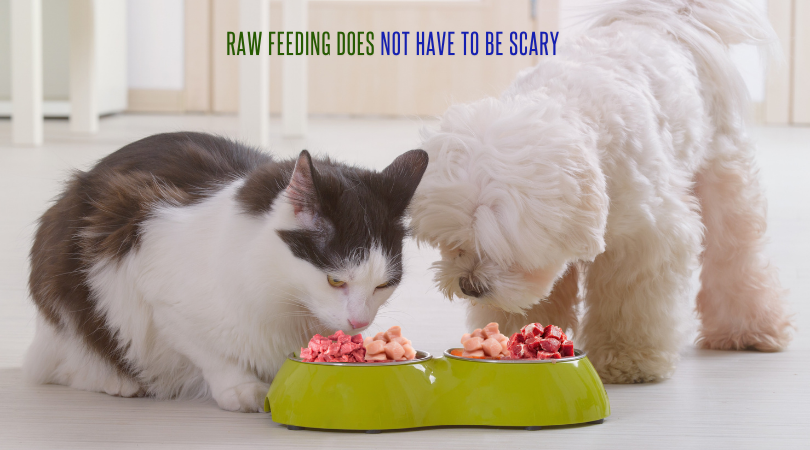
Raw feeding does not have to be scary, gross or unsafe due to bacteria.
I have fed raw food for many years, and one of the biggest concerns I hear from people considering it is, “But what about all the bacteria?”
Salmonella. Listeria. E. coli.
We have been taught to be terrified of microorganisms.
As a naturopath, I tend to look at this differently. I believe health is much bigger than simply trying to kill every germ we encounter.
The body itself is an ecosystem.
Our pets live with enormous communities of bacteria, fungi, yeasts, and other microorganisms every day. Many of those organisms are completely normal and some are essential to healthy digestion, immunity, skin, and overall wellbeing.
Even the CDC acknowledges that animals, just like people, naturally carry many different bacteria and microorganisms, most of which do not cause disease.
This brings us to something naturopaths have talked about for generations: the terrain.
The idea of the body's internal environment goes back at least to the French physiologist Claude Bernard in the 1800s. He called it the milieu intérieur, or internal environment.
Another scientist of that era, Antoine Béchamp, went much further and challenged some of Louis Pasteur's ideas about germs and disease. Béchamp believed that the condition of the organism played an enormous role in determining whether microorganisms became associated with disease.
I don't believe we need to choose between “germs matter” and “terrain matters.”
I believe both matter.
Modern science clearly shows that specific microorganisms such as Salmonella and Listeria can cause disease.
At the same time, the health of the animal, the immune system, intestinal microbiome, nutrition, stress level, age, environment, and overall vitality influence how an animal responds to exposure.
That is very much the holistic view.
We don't need to live in fear of Nature.
But we do need to respect biology.
And raw meat deserves respect.
Whenever possible, I prefer sourcing meat from smaller farms, local growers, pasture-raised animals, organic sources, or companies that are transparent about where their meat comes from and how it is handled.
The closer we can get to clean, naturally raised animals and responsible processing, the better I feel about what is going into my dogs' and kitties bowls.
Of course, that isn't realistic for everyone.
Sometimes you're buying chicken, beef, turkey, organs, or other meats right out of a grocery-store package.
That's okay.
What matters then is handling it intelligently.
One thing I do want to correct because there is a lot of confusion around this: freezing does not sterilize raw meat.
Freezing stops most bacteria from multiplying while the food remains frozen, but organisms such as Salmonella and Listeria can survive freezing. FDA specifically warns that refrigeration and freezing do not reliably kill these organisms.
So I freeze raw food because it is an excellent way to preserve and manage it, not because I assume freezing has made it germ-free.
I portion meats into amounts I can easily use, keep them well sealed, and thaw them in the refrigerator rather than leaving them sitting on the counter.
I also try to keep raw-meat preparation separate from food I am preparing for myself. I use a completely different sink and prep stand in the garage for preparing raw meals.
Think of it just like preparing raw chicken for your family.
You don't need to panic about it.
You simply don't want raw chicken juice on your salad.
I personally like wearing gloves when I'm doing my daily raw-food preparation. They make cleanup easier, especially when I'm handling organs, cutting meat, portioning food, and sometimes once a month grinding several days' worth at once for the cats.
Gloves are not a replacement for hand washing. Hands should still be washed before and after handling raw meat, and gloves should be changed when moving from raw meat to another task. USDA specifically recommends gloves when someone has cuts, abrasions, or infections on their hands.
Then there are the cutting boards.
I like having boards and utensils dedicated to the dogs' raw food.
After preparing raw meat, the most important first step is simply hot, soapy water.
My eco friendly dishsoap is mixed 1/2 and 1/2 with colloidal silver which physically removes fats, food residue, and a large portion of microorganisms.
After cleaning, you can sanitize if desired.
I personally have used colloidal silver and a food grade hydrogen peroxide mix as an additional spray in my raw-feeding area because i have plenty. But even a spray down of silver can really help sanitize.
But I want to make an important distinction here..
So think of colloidal silver as something I personally incorporate into my routine, not as a substitute for physically washing away raw meat residue.
The same caution applies to hydrogen peroxide.
Hydrogen peroxide can be an effective surface disinfectant at appropriate concentrations. But please don't assume that something labeled “food grade” means harmless.
Concentrated food-grade hydrogen peroxide is commonly around 35 percent and can cause serious burns. Household hydrogen peroxide is normally around 3 percent. Make sure to dilute it with silver to use it.
If you're using any disinfecting or sanitizing product around food bowls, cutting boards, or utensils, follow its directions carefully and make certain it is approved for that surface. Some products need to be rinsed afterward.
And never mix hydrogen peroxide with bleach or other cleaning chemicals.
Then we come to bowls.
This is one place where my personal relationship with germs may be a little more relaxed than other people's.
I don't believe animals are meant to live in sterile bubbles.
Dogs lick the ground.
They drink from puddles.
They chew sticks.
They carry things around in their mouths.
My dogs will happily bury a bone and return to their treasure later as though they have discovered a five-star restaurant.
Nature isn't sterile.
But when I'm teaching raw-feeding safety to other people, especially people feeding puppies, senior animals, animals with compromised immunity, or living with young children or vulnerable family members, I think the safest recommendation is simple:
Wash raw-food bowls after meals.
Some food-safety guidelines recommend washing bowls after every wet or raw food meal, but personally, I do not follow that rule.
Stainless steel bowls are my favorite because they are easy to wash, don't hold odors, and can usually go straight into the dishwasher.
I wash the bowls with soap and water after several feedings or in the dishwasher at least once a week for sanitizing and also use my colloidal silver spray as part of my own routine.
Again, I don't believe the goal is to create a sterile animal.
The goal is to avoid creating an unnecessary concentration of decomposing food and potentially harmful microorganisms.
There is a big difference between respecting microorganisms and leaving yesterday's raw chicken sitting in a bowl.
That is really the heart of my philosophy.
Don't fear Nature.
Work with Nature intelligently.
Feed the freshest, cleanest food you can reasonably source.
Freeze and store it properly.
Thaw it carefully.
Keep raw meat away from your own ready-to-eat foods.
Wash your hands.
Wear gloves if that makes raw preparation easier and cleaner for you.
Wash your cutting boards, utensils, preparation area, and bowls.
And then put just as much attention into building the animal's terrain.
Fresh species-appropriate food.
Clean water.
Sunshine.
Movement.
Rest.
A healthy digestive system.
A diverse natural environment.
Less chemical exposure.
Emotional balance.
Connection.
Joy.
Vitality.
Because holistic health was never supposed to mean being frightened of everything around us.
Nor does it mean pretending harmful organisms don't exist.
It means understanding that health is a relationship between the organism and its environment.
We strengthen the terrain while also respecting the realities of the world our animals live in.
That is where I believe the middle path lives.
Not fear.
Not recklessness.
Awareness.
Nature.
And common sense.
Keep the Vibe High.
Jewel
HolisticPetCare.com