Treating Giardia in Puppies: A Holistic and Integrative Perspective
Posted by Jewel on Aug 29, 2026
Giardia is one of those frustrating little parasites that many puppies encounter. It can be picked up from contaminated water, soil, grass, feces, littermates, kennels, and other areas where infected animals have been.
Some dogs can carry Giardia without appearing sick at all. But puppies are different. Their little bodies and digestive systems are still developing, and Giardia can sometimes hit them pretty hard.
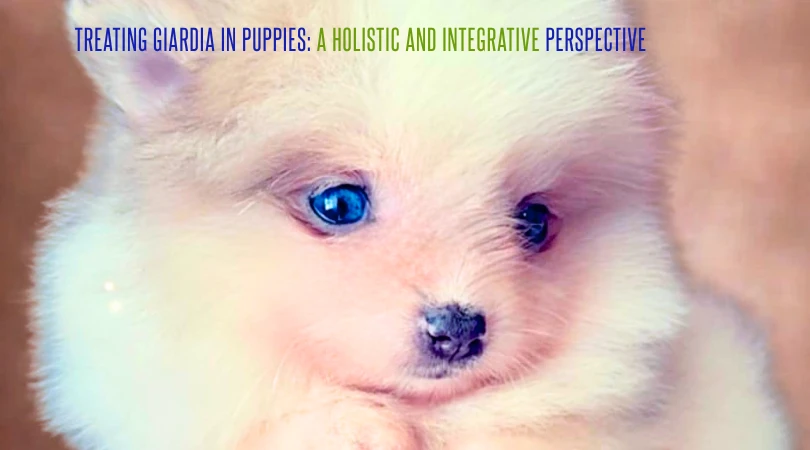
I know this personally because when I brought my little JuJu home, she had Giardia.
She was only about two and a half pounds at the time, and it was really hard on her. I believe deeply in holistic health and supporting the body's natural ability to heal, but I also had to look at the tiny puppy in front of me and make the best decision for her at that moment.
I couldn't allow her to continue having diarrhea, losing nutrients, and potentially becoming dehydrated while I waited for natural approaches to take effect.
So with Juju, I chose an integrative approach.
I supported her naturally while also working with my conventional veterinarian to get the Giardia under control.
And I think this is an important part of true holistic care that sometimes gets overlooked.
Holistic doesn't have to mean "never use conventional medicine."
To me, holistic means looking at the whole animal and asking, "What does this little being need right now?"
Sometimes Nature provides everything we need.
Sometimes conventional medicine provides a useful tool.
And sometimes the wisest path is a combination of both.
Giardia is a microscopic intestinal parasite. Puppies with symptomatic Giardia may develop soft, greasy or mucus-covered stools, digestive discomfort, poor weight gain, decreased appetite, or diarrhea that seems to improve and then return.
Because a tiny puppy can lose fluids and strength much faster than an adult dog, I take persistent diarrhea in a young puppy seriously.
This is also why I don't believe there is one universal "natural replacement for Panacur."
Panacur contains fenbendazole, an antiparasitic medication commonly used for Giardia. When a very young puppy is actively sick, I would rather use conventional treatment appropriately when needed and support the puppy's body holistically at the same time than allow the puppy to become weaker while trying to prove that everything must be done naturally.
That was the decision I made for Juju.
Alongside treatment, I focus very heavily on strengthening and soothing the digestive system.
A quality canine probiotic can be helpful for rebuilding healthy intestinal flora. Slippery elm can also be used as gentle digestive support when the intestinal tract is irritated.
Fresh, appropriate nutrition is important too. The goal is not simply to "kill the bad guy." It is to help restore the intestinal terrain so the puppy's digestive and immune systems can become stronger and more resilient.
Our Holistic Pet Care Natural Dewormer can also be used as part of a broader natural intestinal-support program. However, Giardia is a protozoan parasite, which is different from common intestinal worms, and I would not depend upon a general herbal dewormer alone when a very young puppy has confirmed, symptomatic Giardia.
This is especially important with a 10-week-old puppy.
Some of the stronger herbs traditionally used for intestinal parasites may simply be too much for a very young, tiny animal. Herbs such as Oregon grape root contain powerful plant compounds, and I would be much more conservative using concentrated herbal tinctures in a puppy this young.
This is another place where more is not necessarily better.
The goal is to support the puppy, not overwhelm an already stressed digestive system.
I also use our HighVibe Silver as part of my own holistic wellness approach for my animals. I think of it as supportive care rather than a substitute for a treatment that has been shown to clear Giardia. The most important thing is that the puppy remains hydrated, continues receiving nourishment, and begins feeling and functioning better.
One of the biggest pieces of the Giardia puzzle actually has nothing to do with what you put into the puppy.
It's the environment.
Giardia can be incredibly frustrating because puppies can become reinfected from microscopic cysts left behind on their coat, paws, bedding, bowls, floors, grass, and other contaminated surfaces.
That means you can treat the puppy beautifully and still end up right back where you started if the environment isn't addressed.
Pick up bowel movements immediately.
Wash bedding frequently and dry it thoroughly.
Wash food and water bowls every day.
Keep the puppy away from puddles, standing water, heavily contaminated soil, and areas where infected dogs have been eliminating.
Keep the rear end and paws clean, particularly after a bowel movement.
Bathing the puppy near the end of treatment can also help remove Giardia cysts that may be clinging to the coat and otherwise get swallowed again during grooming.
This environmental piece is every bit as important as what is happening inside the puppy.
Once the active infection and diarrhea are under control, I shift even more attention toward restoring the gut.
This is where holistic care really shines.
Rebuild the healthy intestinal bacteria.
Provide clean water.
Feed nourishing, species-appropriate food.
Support healthy digestion.
Minimize unnecessary chemical exposure.
Give the young immune system the raw materials it needs to mature and become resilient.
And watch the puppy.
That last part is important.
The animal in front of us should always guide the decisions.
If a puppy is bright, playful, eating, drinking, gaining weight, and having only mild digestive changes, you have more room to work gently.
If that same puppy is tiny, having repeated diarrhea, becoming lethargic, refusing food, losing weight, vomiting, or showing signs of dehydration, that changes the picture completely.
That was my experience with Juju.
At only two and a half pounds, I wasn't willing to let her become weaker while waiting to see whether natural remedies alone would be enough. I used the tools available to me, conventional and holistic, and then concentrated on restoring her little body afterward.
I don't regret that choice at all.
True holistic health isn't about choosing a side.
It is about listening to the body.
It is about strengthening the terrain rather than living in an endless war against symptoms and pathogens.
And it is also about recognizing when an animal needs immediate help.
Sometimes the highest expression of natural care is knowing when to support Nature gently.
And sometimes it is knowing when to bring in another tool so Nature has a little breathing room to do what she does best.
That is the balance I chose for Juju, and it is the way I continue to think about Giardia in very young puppies today.
With patience, cleanliness, gut support, good nutrition, and appropriate treatment when it is needed, most puppies can get through Giardia beautifully and move forward with stronger, healthier digestive systems.